

Short answer:
- Write down every outlet, shift and duty the job covers.
- Plan to pay above your state’s median dishwasher wage.
- Put the schedule, pay and physical work in the posting.
- Recruit through your own staff first.
- Interview for attendance more than experience.
- Train on the dish machine and chemicals before the first solo shift.
- Give new hires a steady schedule, a raise on a set date and a way to move up.
- Have a backup plan for call-offs before you need it.
The dishwasher a hotel kitchen needs is someone who comes in for every shift, keeps the dish station moving from breakfast through the last banquet, and is still on the schedule a month later. Most of the work is learned on the job. Reliability is much harder to teach, so the hiring itself should focus on finding people who will show up. Keeping them past the first few weeks takes its own effort, and it starts on their first day.
Tumi Hospitality has staffed hotels since 2005, and dishwashers and kitchen stewards are among the back-of-house roles we fill for hotel kitchens.
What a hotel dishwasher does
A hotel dish station serves more outlets, over more hours, than a restaurant’s does. Banquet ware comes back all at once when an event ends, and many hotels need someone overnight to finish the dishes and reset the kitchen for breakfast.
Before you post anything, write down which outlets and shifts the job covers, and whether it includes pots, trash, receiving, banquet setup or cleaning the kitchen at night. That list becomes your job description, and it tells you which title to use.
Should you post it as dishwasher or kitchen steward?
Choose the job title from your duty list. If the job is mostly the dish machine, post it as a dishwasher job. If it also covers cleaning the kitchen at night, trash and the compactor, or banquet equipment, kitchen steward is the more accurate title. When the job falls between the two, use both, as in “Dishwasher / Kitchen Steward,” so the posting comes up for people searching either word.
Our article on what a kitchen steward does explains how the two roles differ.
How much to pay a hotel dishwasher
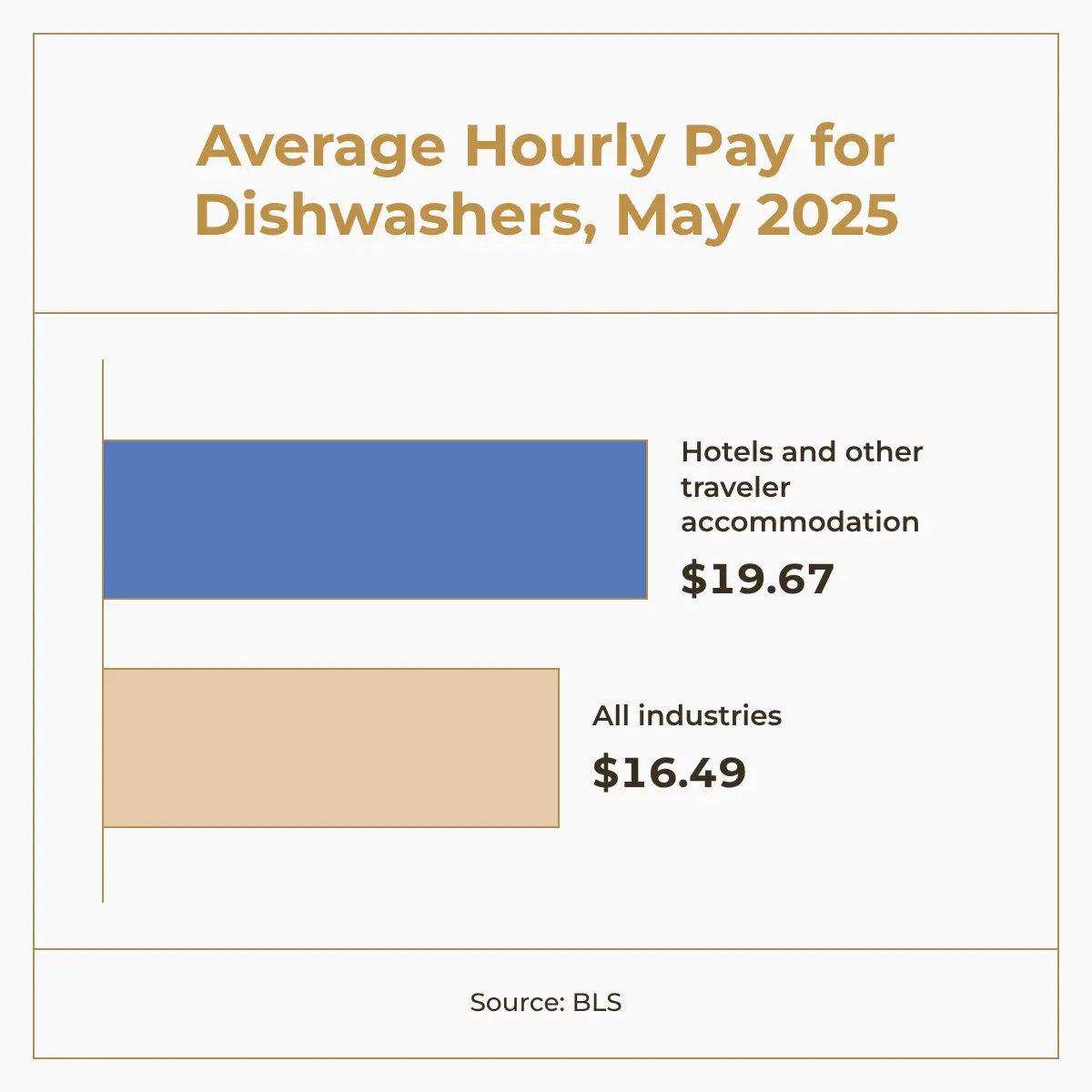
Hotels pay dishwashers more than the all-industry average. In May 2025, dishwashers in hotels and other traveler accommodation averaged $19.67 an hour, about 19% more than the $16.49 average for dishwashers across all industries. Restaurants employ nearly three in four dishwashers, so the all-industry figures mostly reflect restaurant pay (BLS).
Pay also varies a great deal by state. The table below comes from a separate source that measures pay differently, as medians rather than averages. These are May 2025 median figures for dishwashers in five of the states where we work (O*NET, using Bureau of Labor Statistics data). Like the national figures, they cover all industries, restaurants included, so expect to pay above your state’s median for a hotel job.
| State | Median hourly pay | Middle half of dishwashers earn |
|---|---|---|
| Illinois | $17.39 | $15.29 to $18.10 |
| Tennessee | $14.68 | $13.47 to $17.55 |
| Georgia | $14.29 | $12.34 to $17.00 |
| Texas | $14.23 | $12.31 to $16.49 |
| Indiana | $14.17 | $12.71 to $16.61 |
| U.S. | $16.73 | $14.27 to $18.00 |
Source: O*NET, using Bureau of Labor Statistics data, May 2025
In a February 2026 survey by the American Hotel & Lodging Association (AHLA), more than half of hoteliers said their properties were understaffed, and 70% said they were using higher wages to recruit and keep employees (AHLA).
If paying above your state’s median feels high for an entry-level job, weigh it against the cost of replacing someone. A 2006 Cornell study of hotels put the cost of replacing one frontline employee at almost $6,000 (Cornell Chronicle). Our article on the real cost of hotel employee turnover goes into more detail.
What to put in a hotel dishwasher job description
A posting that describes the job honestly does part of the screening for you. Someone who can’t work late banquets, or doesn’t want to stand at a dish machine for a whole shift, will pass on it, and you won’t spend a week finding that out after they start. Include:
- Job title. Dishwasher, kitchen steward or both, based on the duties.
- Outlets and shifts. Where they’ll work, the start and end times, and whether weekends, holidays, late banquets or overnight shifts are part of the job.
- Pay. The hourly rate, plus any benefits, shift differential or staff meal you offer.
- The physical work. Standing for the whole shift, lifting full racks and bus tubs, heat and steam from the machine, and wet floors.
- Duties beyond dishes. Pots and pans, trash, receiving, banquet setup or kitchen cleaning, if they’re part of it.
- Whether experience is required. If you’ll train someone new, say so.
- Minimum age, if the duties require one. Some kitchen equipment is off-limits to anyone under 18.
- How to apply. Say how to apply and how soon you’ll contact applicants.
Where to find dishwashers
Your own staff are the best first source of dishwasher candidates. Ask your cooks, stewards and other departments whether they know someone who wants the job. A current employee who refers a friend is vouching for them, and the new hire starts already knowing someone in the kitchen.
People who are on your payroll now, or were before, are worth asking too. A part-time employee in another department may want more hours, and a former dishwasher who left on good terms may want to come back.
Outside the hotel, post the job on your careers page and the job boards you already use, and contact local high schools, community colleges, workforce centers and community organizations that help people into entry-level work. Our guide to recruiting restaurant staff for your hotel goes further into referrals, internal promotion, job boards and workforce partnerships.
Wherever applicants come from, call them back within a day or two if you can. An applicant who hears nothing for a week has every reason to accept another offer in the meantime.
What to ask in a dishwasher interview
When you interview a dishwasher, ask more about attendance than experience: how they’ll get to work, when they can work, and what they’ve done in the past when they couldn’t.
- “Our breakfast shift starts at [time], and banquets can run past [time]. How would you get here and home, and what would you do if your ride fell through?”
- “Which days and hours can you work every week, and which can you never work?”
- “Tell me about the last time you couldn’t make a shift. What did you do?”
- “Why did you leave your last job?”
- “Have you run a dish machine in a busy kitchen? What did you do when the racks started piling up?”
- “Some banquet nights run late. How do you feel about staying until the dish station is clear?”
Listen for specific answers. An answer like “I take the 5:10 bus, and my sister can drive me if it’s running late” tells you far more than “I’m always on time.”
Explain your call-off procedure in the interview, along with what happens after a no-call, no-show. A candidate who hears it and is still interested knows what you expect from the first day.
Notice how each candidate handled the hiring process, too: whether they confirmed the interview, answered when you called back and arrived when they said they would. Those are the habits you’ll be relying on once they’re on the schedule.
If you want to see a candidate on the machine before you decide, a short paid working interview does that. Our guide to hiring line cooks for your hotel kitchen explains how to run one and how to check references.
Can you hire a teenager as a dishwasher?
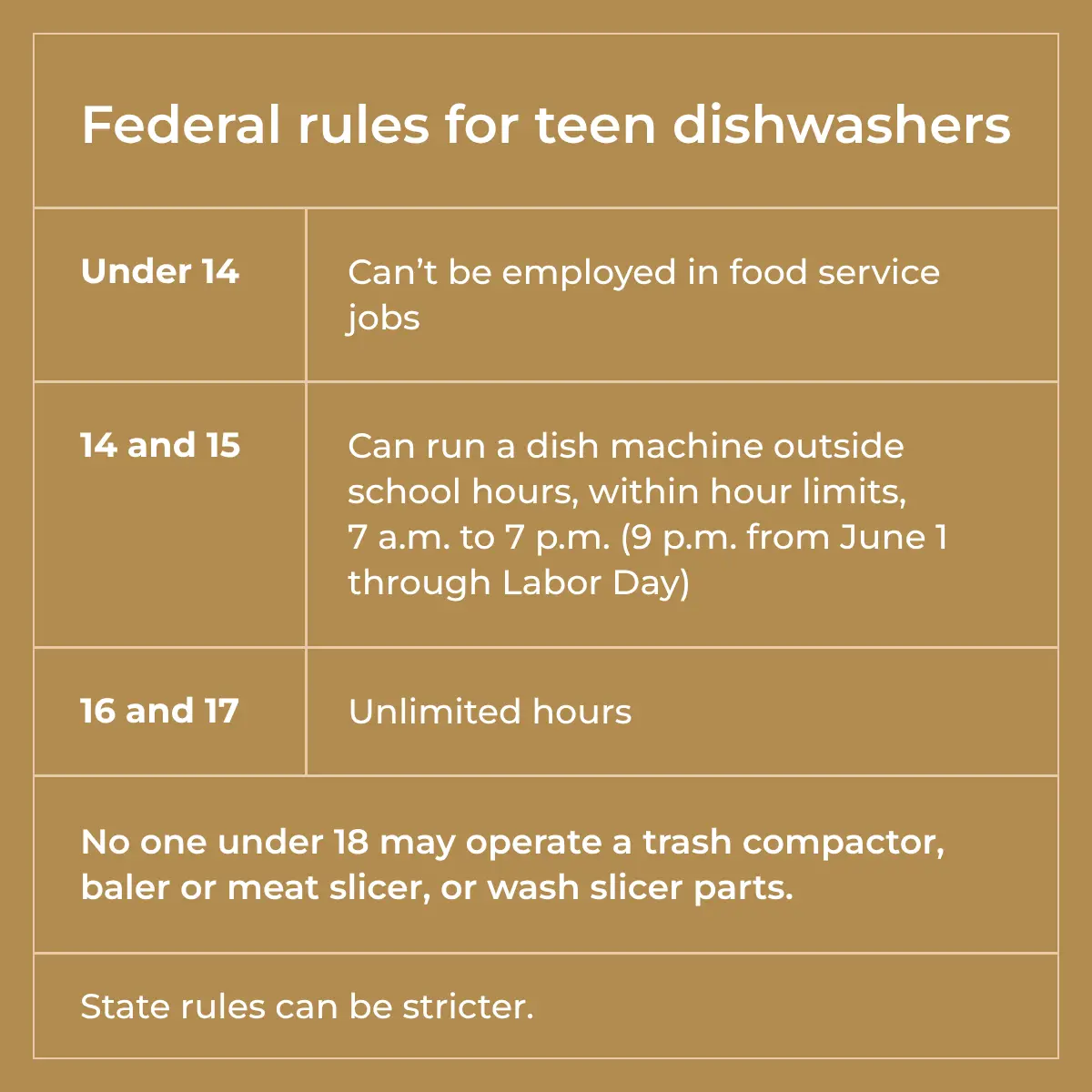
Federal law allows teenagers to work as dishwashers, with limits that depend on their age. Children under 14 can’t be employed in food service jobs. Workers who are 14 or 15 can do kitchen work, including running a dish machine (29 CFR 570.34), but only outside school hours and within these limits (U.S. Department of Labor):
- Up to 3 hours on a school day and 18 hours in a school week
- Up to 8 hours on a non-school day and 40 hours in a non-school week
- Only between 7 a.m. and 7 p.m., extended to 9 p.m. from June 1 through Labor Day
In a hotel kitchen, that rules out any breakfast shift that starts before 7 a.m. and any overnight shift, all year. Except from June 1 through Labor Day, it also rules out any dinner close or evening banquet that runs past 7 p.m.
Workers who are 16 or 17 can work unlimited hours, but no one under 18 can do work the Department of Labor has declared hazardous (Fact Sheet #43). That includes operating or unloading a trash compactor or baler. It also covers operating or cleaning a power-driven meat slicer, and that includes hand-washing its parts. When slicer parts come to the dish station, someone 18 or older has to wash them.
State rules can be stricter, and where state and federal rules both apply, the stricter one governs. Many states also require minors to have a work permit, which federal law does not. Check with your state labor department before you hire anyone under 18.
Training a new dishwasher before the first shift
Train a new dishwasher on the machine and the chemicals before they work a shift alone. For the first few shifts, schedule them next to an experienced dishwasher or steward, and keep their first solo shift away from your heaviest banquet night.
For the Form I-9, the new hire completes Section 1 no later than their first day of work, and you or HR complete Section 2 within three business days after that day (USCIS).
Dish machine and chemical safety
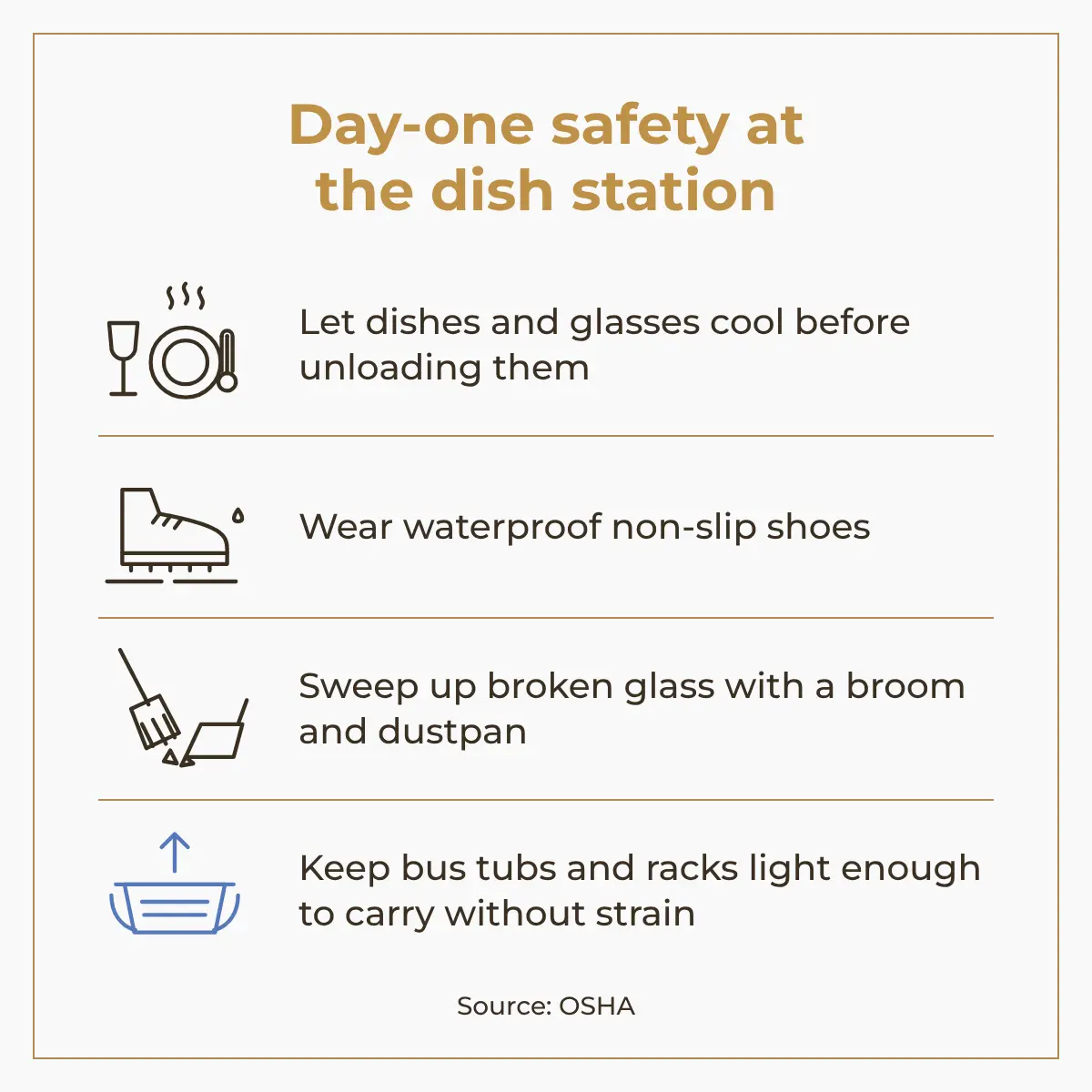
OSHA’s guidance on kitchen cleanup covers the basics every new hire should hear on day one: let dishes and glasses cool before unloading them, wear waterproof non-slip shoes, sweep up broken glass with a broom and dustpan rather than by hand, and keep bus tubs and racks light enough to carry without strain (OSHA).
Chemical training is a legal requirement. Federal rules say you must train employees on the hazardous chemicals in their work area when they’re first assigned there, and keep the Safety Data Sheets for those chemicals where employees can reach them during every shift (OSHA Hazard Communication standard). Show a new dishwasher where the sheets are and what each product is for. Make sure they know never to mix chlorine and ammonia solutions, which together can release deadly chlorine gas.
Sanitizing dishes to code
Where your health department has adopted the FDA Food Code, it makes the person in charge of the establishment responsible for making sure employees sanitize dishes properly and are trained in food safety for their duties (FDA).
In a machine that sanitizes with hot water, the Food Code requires the surface of the dishes to reach 160°F. That is measured with an irreversible registering indicator, a thermometer or heat-sensitive label that keeps the highest reading it reached as it went through the machine. Show a new hire how to run one through and read it, and who to tell when it comes up short. In a machine that sanitizes with chemicals, the sanitizer’s label sets how it must be used, including how long it stays in contact with the dishes, so train new hires to that label.
Whether a dishwasher also needs a food handler card depends on your state and county.
How to keep dishwashers from quitting
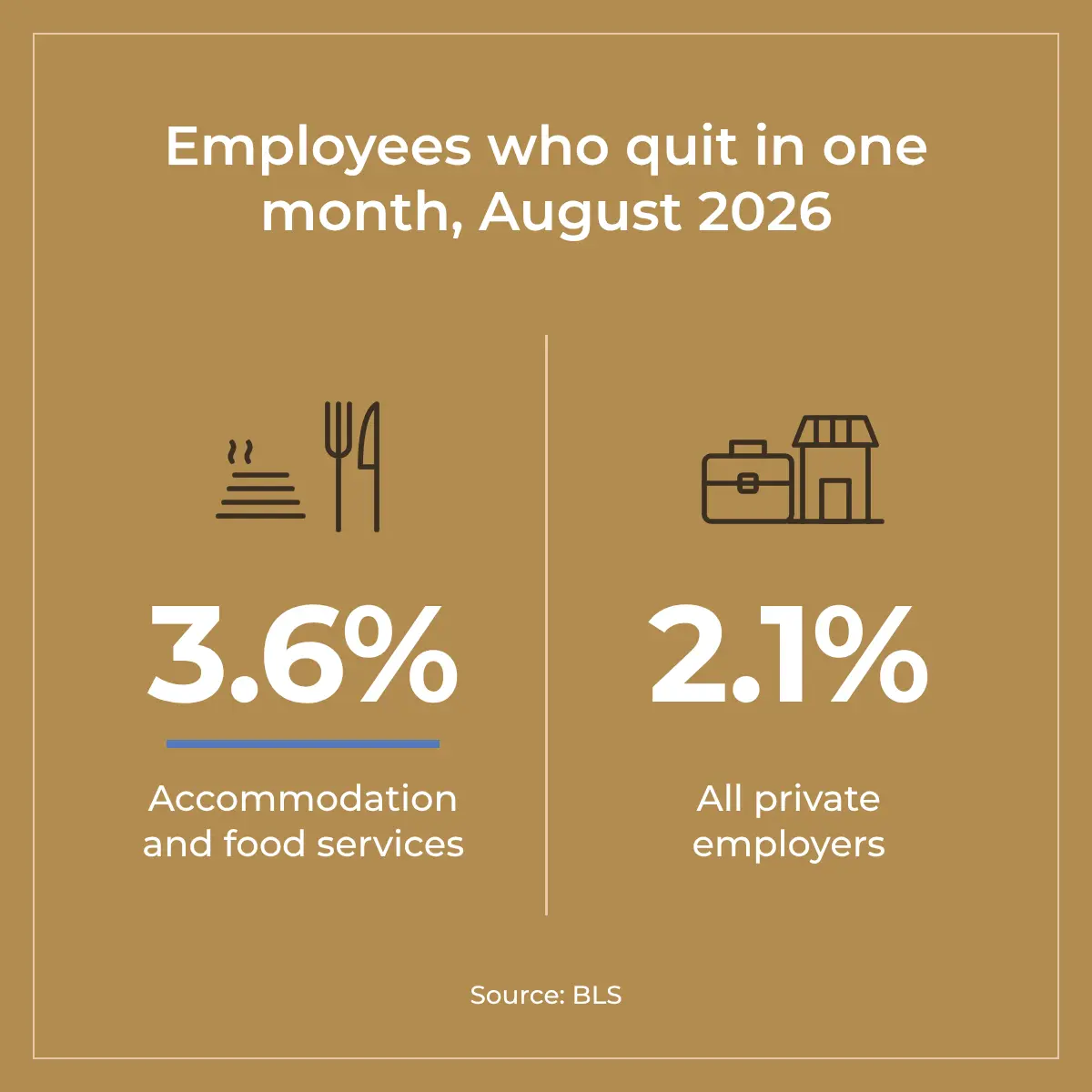
Hotels are part of accommodation and food services, a sector where employees quit at a much higher rate than in the private sector overall. In August 2026, 3.6% of the sector’s employees quit in that one month, compared with 2.1% across all private employers (BLS).
The first two weeks. Check in at the end of each shift for the first week or two. Ask what was hard, fix what you can and tell them what they’re doing well. A new hire who is struggling in the first week is much easier to help than one who has already decided to leave.
A schedule they can plan around. Post schedules well in advance and keep shifts as consistent as you can. Hourly employees arrange childcare, transportation and sometimes a second job around their hours, and a schedule that changes every week makes that hard. Within a consistent schedule, you can still allow some flexibility, such as letting dishwashers swap shifts with each other when something comes up. In AHLA’s February 2026 survey, 54% of hoteliers said they use flexible scheduling to recruit and keep employees (AHLA).
A raise on a set date. Tell new hires when their first raise comes and what earns it. Our full-time employees get their first raise after a successful 90-day probation and another at one year, so they know from the start that staying brings more pay.
Benefits they know about. If dishwashers are eligible for benefits or paid time off, tell them at hire and show them how to use them.
A way to move up. Tell them where the job can lead. A dishwasher who learns prep can move to the line, and one who takes on more of the steward’s work, such as pots, equipment care and the closing clean, can grow into a lead steward. Promoting from the dish station also gives you cooks who already know your kitchen and your standards.
A place on the team. The dishwasher is easy to overlook, so make a point of including them: bring them into pre-shift meetings and staff meals, and thank them by name after a heavy banquet.
What to do when a dishwasher calls out
Plan for call-offs before the first one, so nobody has to decide who covers the dish station in the middle of service. The plan needs three parts:
- A call-off procedure. Who they call, how many hours before the shift, and how they know the message reached you. Put it in writing and go over it with every new hire.
- A call list. A few people who can cover the dish station on short notice, such as part-time staff who want more hours, a cross-trained prep cook or steward, or a dishwasher from another outlet.
- A fallback. When you write the schedule, decide which station will send someone to the dish station if nobody on the list can come in, and tell that station’s lead.
A staffing partner can help with both call-offs and positions that stay open. Our employees work alongside your own staff as part of your kitchen team. Most of our work is ongoing, with our employees working a hotel’s regular schedule. Placing one of our employees in an open dish position, on your regular schedule, typically takes two to three weeks. When a dishwasher calls off, same-day or next-day coverage is possible if one of our existing staff is available.
Every Tumi employee is a W-2 employee, and our full-time employees receive benefits. You can read more about our hotel dishwasher staffing.
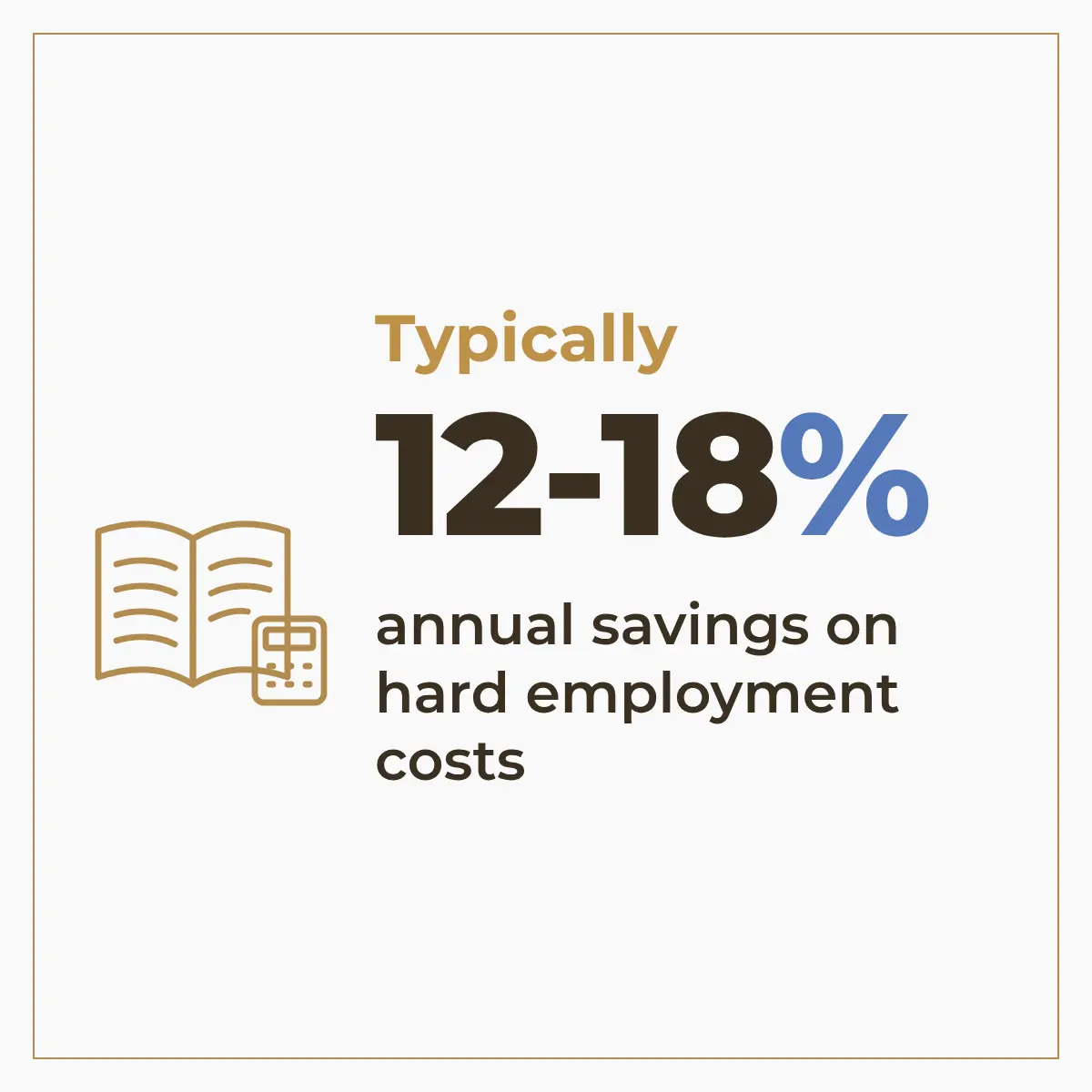
When you compare a staffing partner with hiring in-house, compare the total cost. You pay our invoice, without separate payroll tax, workers’ compensation, insurance or benefit costs, and we handle recruiting, training and replacement. Counting those costs, hotels we work with typically see 12-18% annual savings on hard employment costs.
If a dish shift at your hotel keeps going uncovered, or you’d like a backup in place before your next busy season, we’d be glad to talk it through. You can request a no-obligation consultation, call us at (512) 722-6000 or email info@tumihospitality.com.


