To hire a line cook for your hotel kitchen, start by deciding which outlets and stations the cook will cover. Set a pay range from hotel pay data and your local market. Write a posting that lists the stations, the shifts and that pay range. Look for candidates through your current kitchen team, culinary school programs and a general job posting. In the interview, ask about banquet volume and early, late and weekend shifts. Bring your strongest candidates in for a paid working interview on your line. Before you make an offer, call each finalist’s last chef for a reference and get written consent for any background check. Once the cook starts, make sure they get any food handler card your state requires by its deadline. Then train them on every outlet’s menu and standards during the first few weeks.
Tumi Hospitality has staffed hotels since 2005, and line cooks are among the back-of-house roles we place in hotel kitchens.
What does a line cook do in a hotel kitchen?
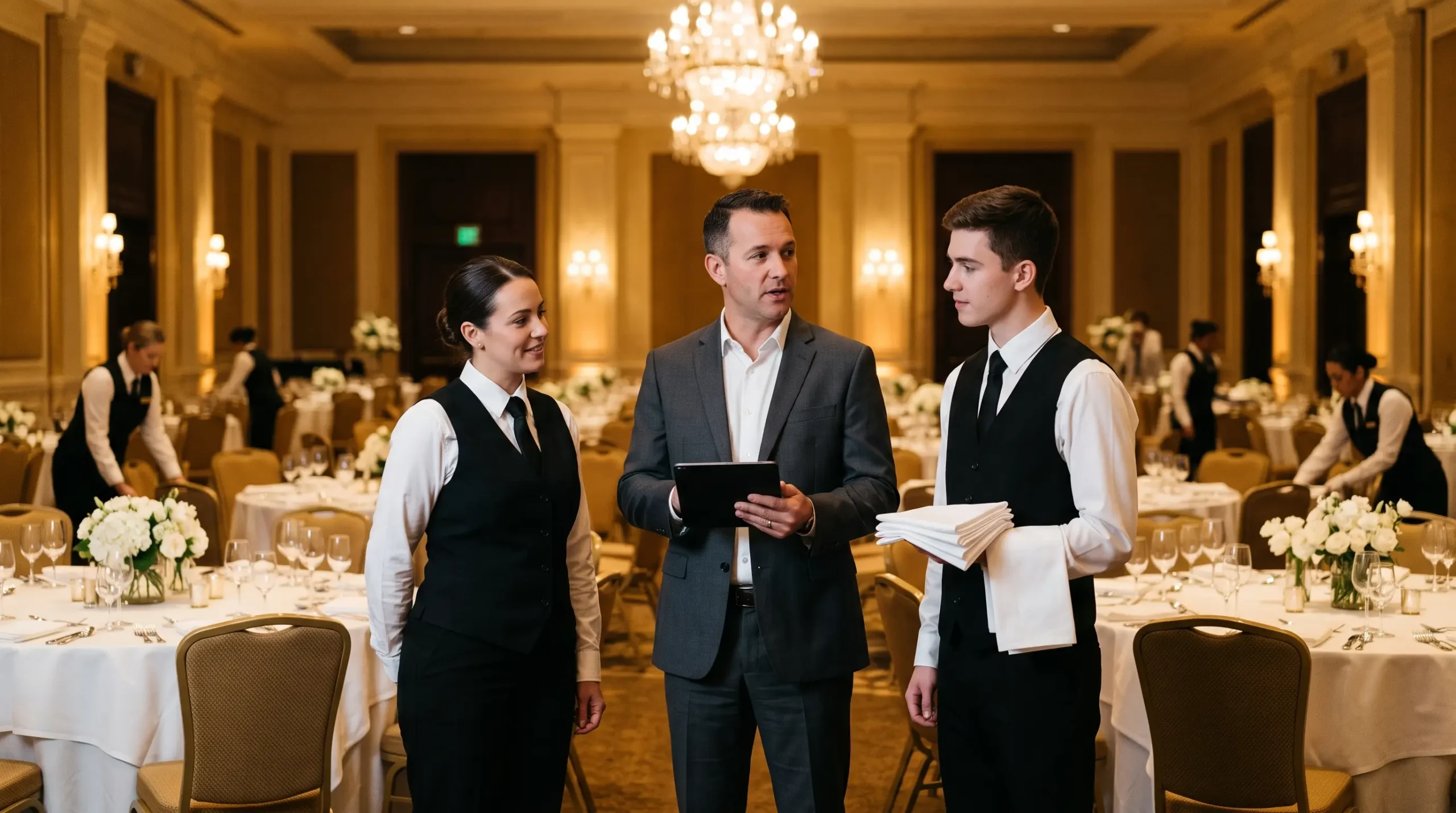
A hotel line cook works a station and cooks every dish to the kitchen’s spec, as a line cook does in any kitchen. In a hotel, one cook often covers several outlets, such as breakfast, the restaurant, banquets and room service. Each outlet can have its own menu and its own pace. Banquet work means plating a large number of the same dish so that every plate is ready at the same moment. Room service means cooking single orders late at night with a smaller crew on the line.
The amount of work also rises and falls with the hotel’s occupancy and event calendar. A cook can have a quiet weeknight and a full banquet weekend in the same week. Look for a cook who can handle several menus, quiet and busy shifts, and early and late hours. Describe that mix of work in your posting, then test for it in the interview and the working interview.
Skills to look for in a hotel line cook
In hotel dining, a line cook has to work fast and keep every plate consistent at the same time. A banquet has to go out on schedule, and every plate in it has to match the chef’s spec. Look for these skills in every candidate:
- Consistency to the recipe. A strong line cook follows each outlet’s recipe cards and plating guides on every order, including at the end of a long shift. That habit is what makes a dish look and taste the same every time a guest orders it.
- Speed under pressure. Breakfast rushes and banquet nights put many orders on the line at the same time. A good cook works at a steady pace and plates every dish to standard when the orders come in fast.
- Food safety habits. Look for a cook who keeps the station clean and handles food safely without reminders. On a busy hotel line, the chef cannot check every step, so these habits need to be automatic.
- Working more than one station. Hotel kitchens often move cooks between stations and outlets as volume changes. A cook who can work the grill one night and the banquet line the next is easier to schedule.
- Reliability for early, late, weekend and holiday shifts. Hotel kitchens need cooks for all of those shifts. The candidate’s last chef can tell you whether the cook showed up on time for the shifts they were scheduled to work.
- Taking direction. Your chefs set the menu and the standards for every outlet. A cook who listens, asks questions and adjusts right away learns those standards faster.
How much do line cooks make in a hotel?
Line cooks in hotels earned a median of $19.42 an hour in May 2023, the most recent year with federal pay figures broken out by industry. The hotel median was higher than the median for restaurant cooks across all industries ($17.20) and in full-service restaurants ($17.18). These figures come from the federal job category for restaurant cooks, which includes line cooks.
| Where Restaurant Cooks Worked | Median Hourly Wage | Average Hourly Wage |
|---|---|---|
| All industries | $17.20 | $17.34 |
| Hotels and other traveler accommodation | $19.42 | $20.29 |
| Full-service restaurants | $17.18 | $17.23 |
Source: U.S. Bureau of Labor Statistics, Occupational Employment and Wage Statistics, May 2023
Source: May 2023 federal wage estimates for restaurant cooks in all industries, traveler accommodation and full-service restaurants.
Pay has risen since 2023. The national median for all restaurant cooks reached $17.98 an hour in May 2025, the most recent national figure. Because the hotel figure is from 2023, check it against current pay in your own market before you set a range.
Local pay can be well above or below the national figures. The U.S. Bureau of Labor Statistics publishes wage figures for restaurant cooks by state and by metro area. Set your range from the hotel figure and your local figure, then put it in your job posting.
What to include in a hotel line cook job description
A clear job description helps the right cooks apply, because it tells them what the hotel job involves before anyone spends time on an interview. Include these details in the posting:
- Outlets and stations. Name each outlet and station the cook will cover. Candidates can then see whether their experience matches the job.
- Shift pattern. Give the usual start and end times, and say whether the role includes early, late, weekend and holiday shifts. A candidate who knows the schedule can decide before applying whether it works for them.
- Pay range. Post the hourly range you set from hotel and local pay figures. Cooks who want more than your range can skip the posting, so you spend interview time only on cooks who would accept your offer.
- Requirements. List the line experience you expect and any certificate the cook must hold. Where your state requires a food handler card, say so in the posting, along with how many days the cook has to get it after starting work.
- Physical demands. Say that the job involves standing for a full shift, lifting and carrying supplies, and working in a hot kitchen. Be specific about lifting, such as the weight of the heaviest item a cook moves in a normal shift.
Where to find line cooks for a hotel kitchen
Start your search with your own kitchen. Your current cooks know other cooks, so ask them for referrals. You can also promote a prep cook or steward who already knows your standards. Many line cooks start as kitchen helpers or food prep workers and learn the job through on-the-job training. Outside your kitchen, culinary school programs near your hotel can connect you with students and recent graduates. A general job posting also reaches cooks you would not find through your own team or local schools. For the wider process of recruiting your hotel restaurant team, including front-of-house roles, our guide on how to recruit restaurant staff for your hotel explains each step.
Line cook interview questions for a hotel kitchen
Good interview questions for a hotel line cook ask about real work the candidate has done, including the volume and the hours that come with a hotel kitchen. Ask for specific shifts and dishes, because a cook who has done the work can describe it in detail.
- “Walk me through how you set up your station before service.” A good answer is specific about what the cook preps, how they arrange it and how they make sure there is enough for the whole shift.
- “Tell me about the busiest service you have worked. What did you do to keep up?” A strong candidate describes the volume and the steps they took, such as prepping extra or asking for help early.
- “Have you worked a banquet or a large event? How did the kitchen plate that many dishes?” Listen for experience plating the same dish for a large group, with every plate matching and all of them ready at the same time. A cook who has only cooked individual orders can learn banquet work but will need extra training.
- “Have you cooked late-night orders, such as room service, with a smaller crew?” Look for a cook who followed each recipe exactly even with less supervision.
- “Our schedule changes with occupancy and events. Which shifts can you work, and how much notice do you need?” An honest, specific answer tells you whether the cook fits your schedule before you hire them. If the answer is vague, ask about specific shifts, such as weekend banquets or early breakfast service.
- “How do you make sure a dish looks and tastes the same every time?” Listen for recipe cards, measuring, portioning and tasting before the plate goes out. These habits are what keep a dish the same from one order to the next.
- “What do you do when a plate comes back from a guest?” A good answer is calm and practical: remake the dish to the recipe, tell the chef and find out what went wrong. It shows how the cook takes direction and handles a mistake.
How to run a paid working interview for a line cook
A paid working interview, which many kitchens call a stage or a trail, shows you how a candidate cooks your food on your line before you make an offer. Plan for a few hours: long enough for the candidate to set up a station, cook your dishes and work part of a real service, such as a breakfast rush or the first hours of dinner.
Have the candidate cook two or three dishes from your current menu, using your recipe cards and plating guides. If the cook will work more than one outlet, include a dish from each, such as a banquet plate made in quantity.
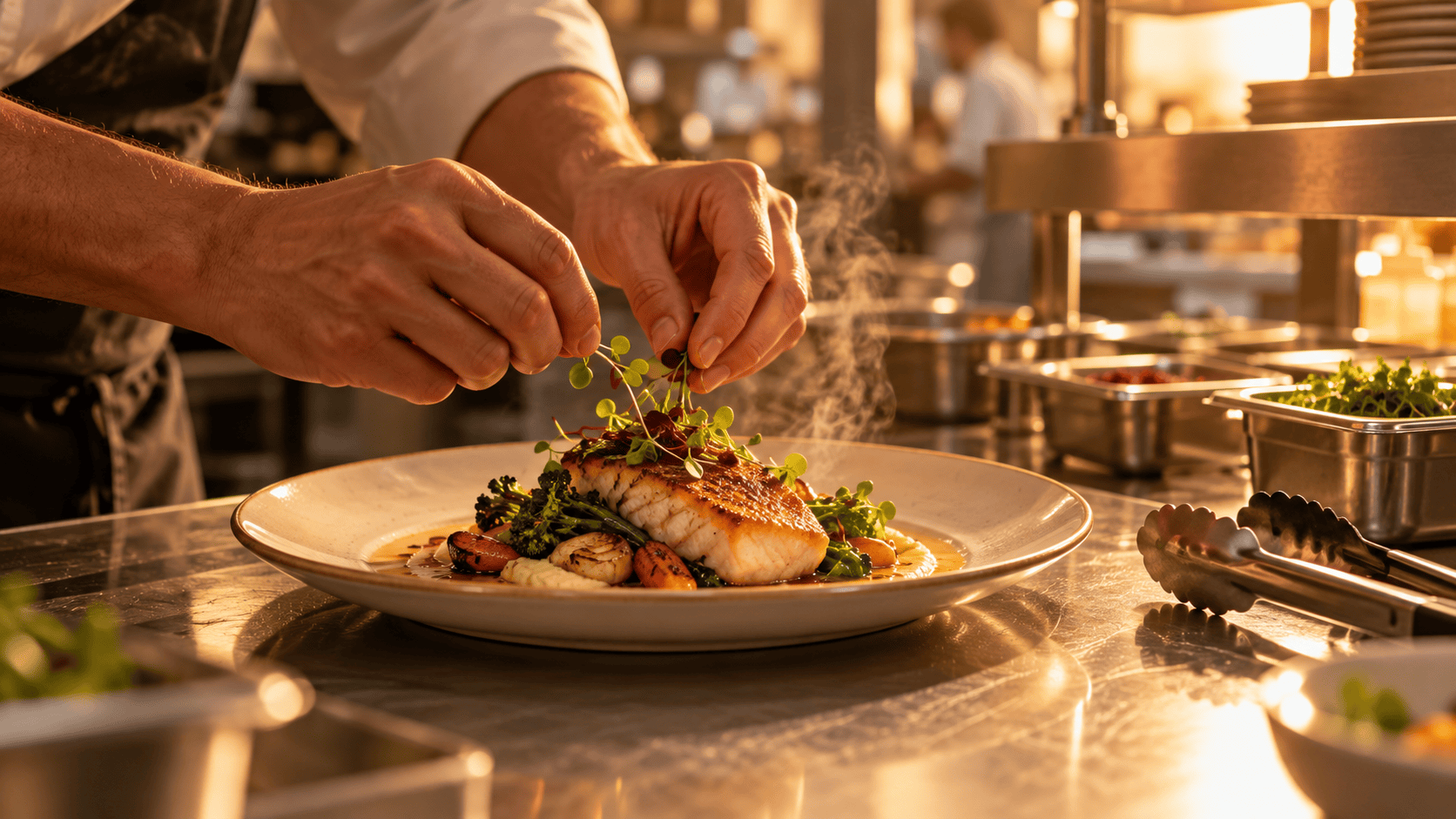
Watch how the candidate works as closely as you watch the plates. A strong candidate sets up the station in an order that makes sense, cleans as they go and follows the recipe card without changing it. Their plates for one order come up together, and they taste before a plate leaves the station. They also talk with your team during service and ask when something is unclear. After the shift, ask the cooks who worked beside the candidate what they saw, because they worked the same service and watched the candidate up close.
When you decide, weigh habits more heavily than speed. A good cook will get faster on your menu with training. Habits such as changing a recipe without asking, working a messy station or sending food without tasting it are harder to change. A candidate cooking your menu for the first time may make a mistake. How they handle it tells you more than the mistake itself. Hire the cook who notices a mistake, fixes it and tells you, even if they were not the fastest cook you saw.
Pay the candidate for the shift at the hourly rate the job offers, because they are cooking for your kitchen during a real service.
Reference checks, background checks and food handler cards
A reference call to the candidate’s last chef or kitchen manager is the most direct way to check reliability before you hire. Ask whether the cook arrived on time for scheduled shifts, including early and weekend shifts, and how often they called out. Ask how the cook handled the busiest nights. Then ask whether the chef would hire them again. If the answer is no, or the chef hesitates, ask why before you make an offer.
If you use a screening company to run a background check, you need the candidate’s written permission before the check.
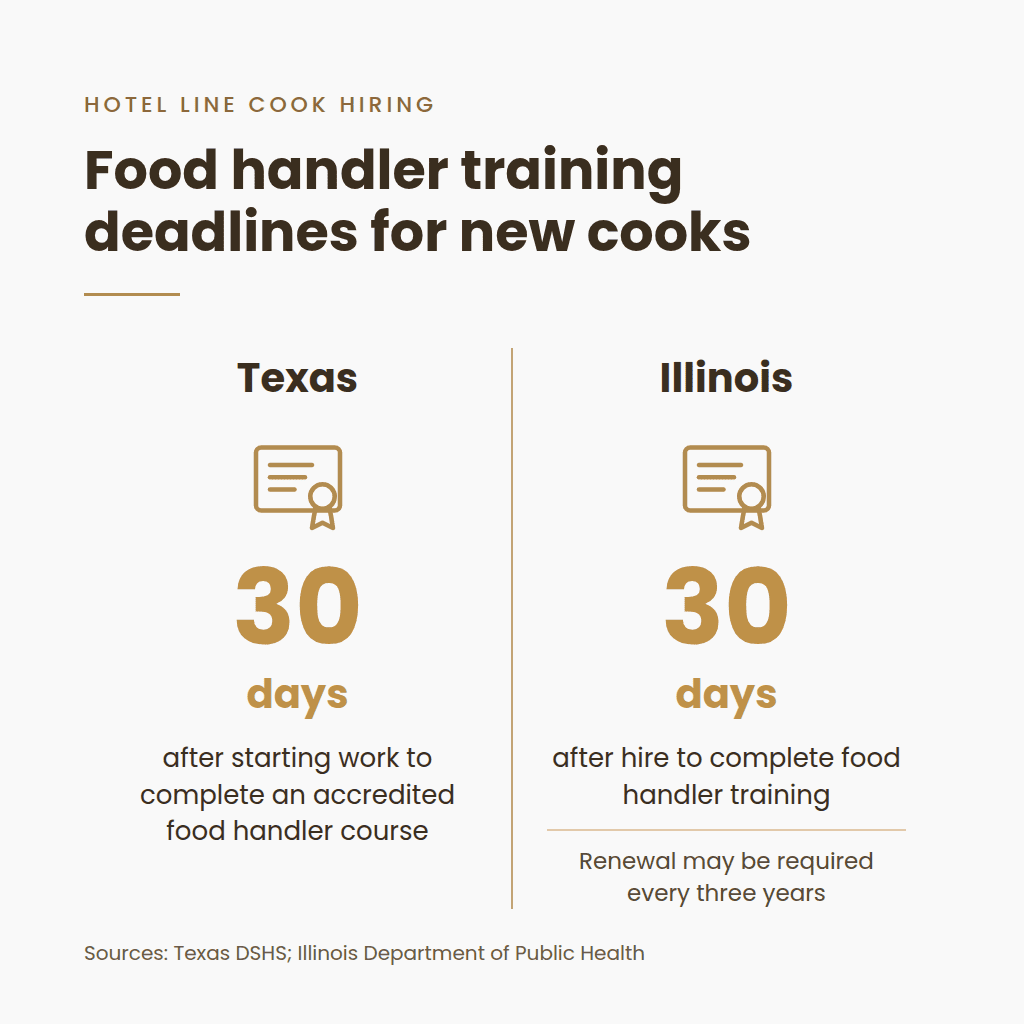
Food handler rules differ by state. Some states give a new cook time after hire to get a food handler card. In Texas, food employees must complete an accredited food handler course within 30 days of starting work, unless they are certified food managers. Illinois also requires food handler training within 30 days of hire. Illinois food handlers may have to renew their training every three years. In both states, the card does not need to be in hand when you make the offer, so track the deadline during the cook’s first month. If your hotel is in another state, check your state or local health department’s rules before the cook’s first shift.
How to keep new line cooks from leaving
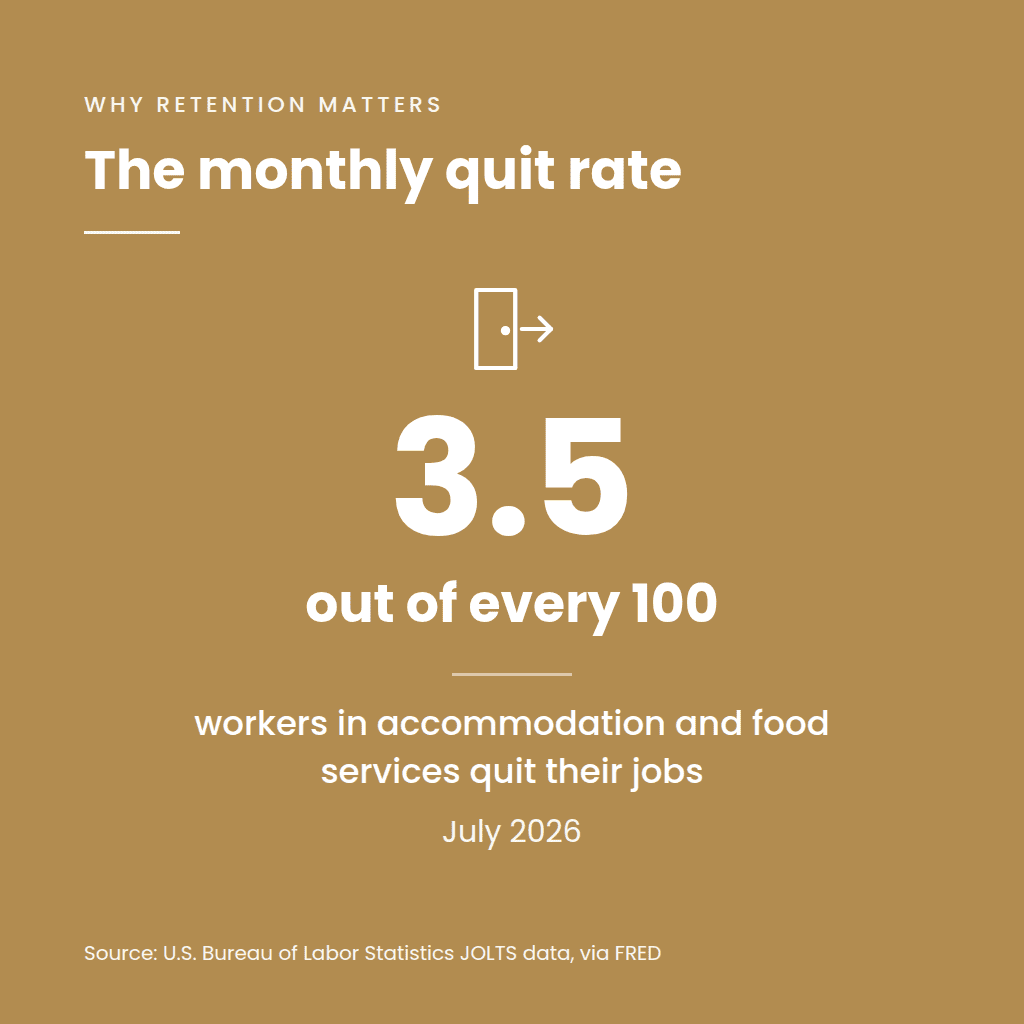
Turnover is high across the hotel and food service industry, so plan how you will keep a new cook before they start. In August 2026 alone, about 3.5 out of every 100 workers in accommodation and food services quit their jobs.
During the first weeks, train each new cook at your property on the menu and standards of every outlet they will work. Post schedules as far ahead as your occupancy forecast and event bookings allow, so cooks can plan their weeks. Offer benefits such as health insurance and paid time off. Show each cook what they need to do to earn a raise, such as learning another station or outlet. Turnover also costs a hotel money to recruit, hire and train each replacement, which we cover in our article on the real cost of hotel employee turnover.
How a staffing partner keeps your hotel line covered
Even a well-staffed hotel line has gaps, such as the weeks between a cook leaving and a new hire starting, or a stretch of large events. Cover what you can with your own team first. Cross-train prep cooks on one or two line stations so they can work a station when a line cook is out. Keep a few part-time cooks you can schedule for banquet nights and other busy shifts.
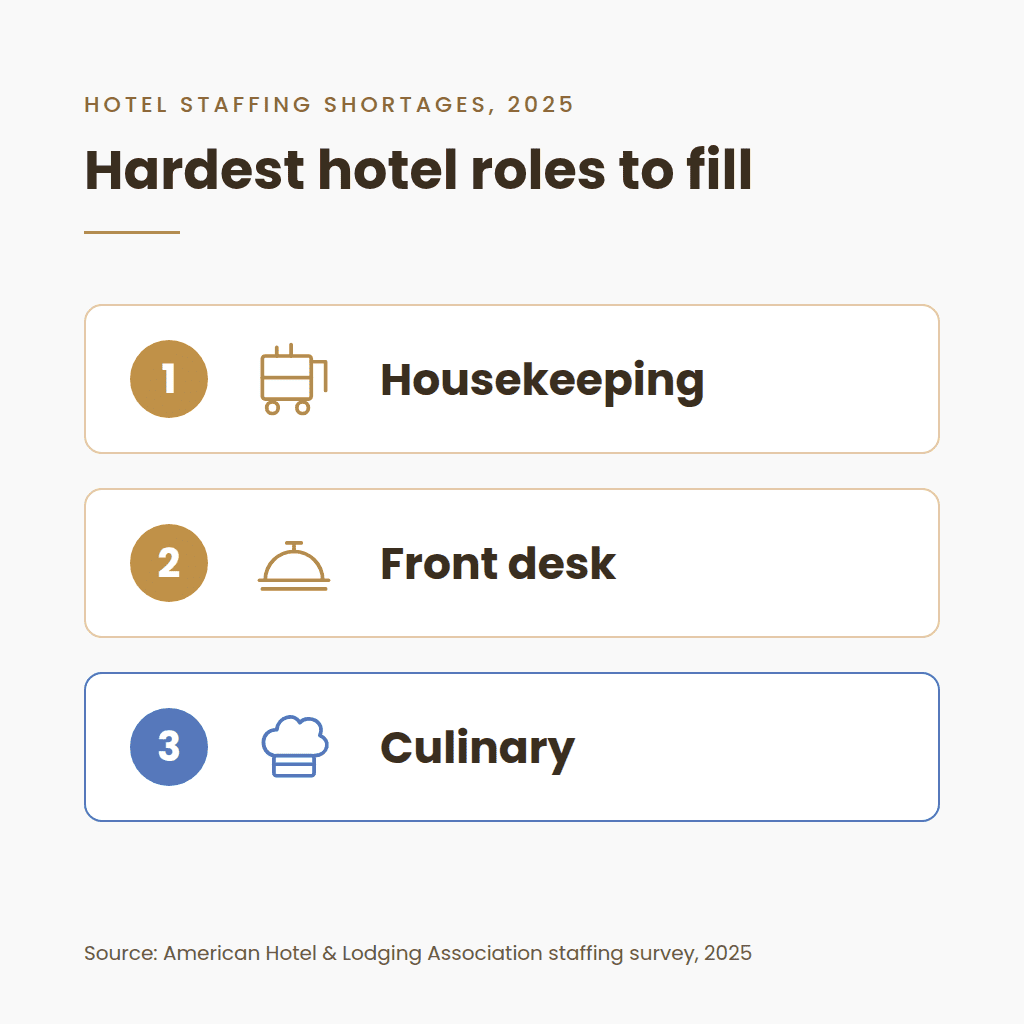
When your own team cannot cover every shift, a staffing partner can provide line cooks for an open position or for a busy stretch. Staffing gaps are common across the industry. In a survey released in early 2025, nearly two-thirds of surveyed hotels reported staffing shortages. Culinary positions ranked third among the hardest hotel roles to fill, after housekeeping and front desk.
At Tumi Hospitality, we provide line cooks for hotel kitchens as part of our food and beverage staffing for hotel dining. We have staffed hotels since 2005 and are the largest hospitality staffing firm in Texas. The cooks we place are our W-2 employees with full benefits. Hotels that partner with Tumi typically save 12-18% a year on hard employment costs, because the hotel no longer pays the payroll taxes, workers’ compensation, benefits, recruiting and turnover costs for those cooks directly. A dedicated area manager visits your property every week and is your main contact for the cooks we place.
Plan ahead where you can, because placing a cook for an ongoing need typically takes two to three weeks, including screening and training. Same-day or next-day coverage is possible only when cooks already on our team are available in your area, so it is not guaranteed.
Frequently asked questions
Does a line cook need a culinary degree?
No. Most line cooks learn the job through on-the-job training and work experience, and no formal education is required. Some cooks attend culinary school, where programs generally last from a few months to two years. Other cooks complete an apprenticeship, which typically lasts about one year. Because a degree is not required, judge candidates on their line experience, their references and their working interview.
What is the difference between a line cook and a prep cook?
A line cook cooks and plates dishes to order during service. A prep cook gets ingredients ready before service, which includes washing, peeling and cutting produce and preparing food by following instructions. When you hire for the line, test candidates during a live service, because prep work does not show whether a cook can handle orders as they arrive.
Talk with us about staffing your hotel kitchen
If you are hiring line cooks for your hotel kitchen, or need cooks on the line while you hire, we would be glad to talk with you. You can request a no-obligation consultation to discuss your kitchen’s staffing needs. We will then prepare a proposal for your property based on what you tell us. You can also call us at (512) 722-6000 or email info@tumihospitality.com.