

To hire a night auditor for your hotel, screen candidates first for accuracy with numbers, sound judgment, and reliable attendance. Also check that they are comfortable with a property management system, calm with guests, and trustworthy with cash. Test their accuracy in the interview with a short balancing exercise. Plan to pay more per hour than you pay your daytime desk clerks. Before you make the hire, decide who will cover the nights your night auditor is off.
A night auditor often works the front desk alone overnight and is responsible for your guests, the cash drawer, and the day’s accounting until morning. That is why accuracy, judgment, and reliable attendance are the qualities to hire for first.
At Tumi Hospitality, night auditors are among the hotel front desk staff we provide. We are based in Austin, have provided hotel staffing since 2005, and are the largest hospitality staffing firm in Texas. In our experience, overnight positions are among the hardest hotel shifts to fill and keep staffed.
What does a night auditor do?
A night auditor does two jobs in one shift. They cover your front desk overnight, and they complete the audit that closes out the hotel’s accounting for the day. The shift runs through the overnight hours, after the rest of your front desk team has gone home.
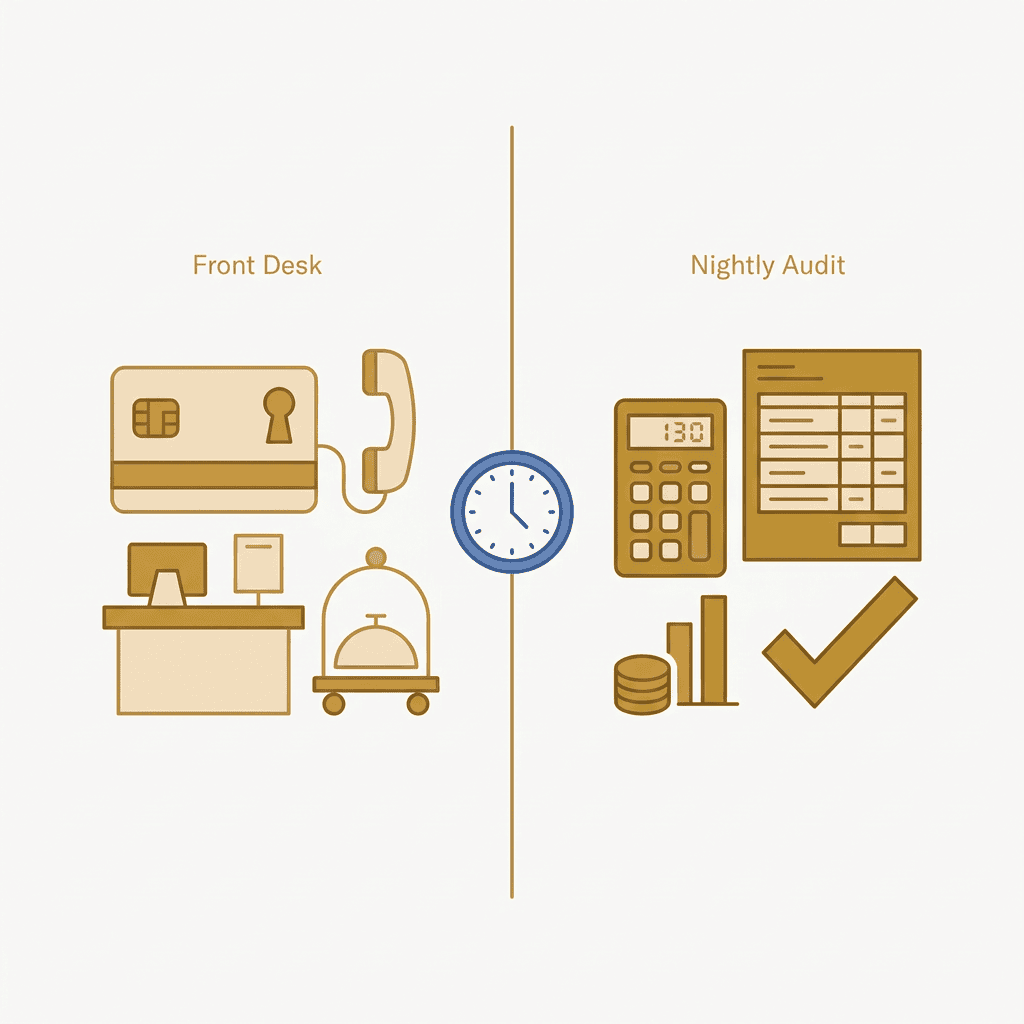
The front desk work is much like a day clerk’s job. The night auditor checks in late arrivals, issues room keys, takes payments, and handles guest requests. They also respond to any security or safety concern that comes up during the night.
The audit work is what makes the role different from other front desk positions. The night auditor posts the day’s room charges and other guest charges and reconciles the payments taken during the day. They then balance the accounts, which means checking that the day’s totals match what was actually charged and collected. Completing the audit closes the business day and produces the reports your managers review in the morning.
What to look for when hiring a night auditor
The best night auditor candidates combine front desk skills with careful, accurate work on numbers. They also need to handle guests and problems on their own, because there is usually no manager on site overnight to check their work or step in. Screen every candidate for these qualities:
- Accuracy with numbers matters most, because the audit depends on every charge and payment being checked. Look for someone patient enough to find the cause of a total that does not match.
- Experience with a hotel property management system shortens training. A candidate who has used any hotel system will usually learn yours faster than someone who has never worked in one.
- Calm, courteous guest service is essential when there is no manager to call on. The night auditor handles late arrivals, complaints, and billing questions, so look for someone who stays polite and steady with an upset guest.
- Sound judgment in a security or safety situation protects your guests and your property. A good night auditor knows when to call emergency services, when to call a manager, and when to handle a situation themselves.
- Reliable attendance matters because a missed night audit shift leaves your front desk uncovered and the day’s accounting unfinished. Ask each candidate’s references whether they showed up for every scheduled shift.
- Trustworthiness with cash and guest information is required, because the night auditor takes payments and can see guest records while working without supervision.
Count a front desk certification, such as the Certified Front Desk Representative credential, as a plus, because it shows a candidate has completed a formal front desk training program.
A candidate who gives vague answers about handling cash or balancing a drawer at past jobs may have trouble with the audit. A candidate who seems uncomfortable working alone overnight may have trouble with both the front desk work and the audit.
How do you test a night auditor candidate in an interview?
Ask each candidate how they would handle the accounting, upset guests, and emergencies on an overnight shift. Then give them a short practical exercise that shows how accurate their work is.
Each of these questions tests one of the qualities a night auditor needs:
- “Tell me about a time your cash drawer or end-of-shift totals did not match. How did you find the problem?” A strong answer describes the specific steps the candidate took to find the cause, such as recounting the drawer and checking each transaction against its receipt.
- “Which property management systems have you used, and how long did it take you to learn the most recent one?” The answer tells you how much training to plan for.
- “A guest arrives in the middle of the night, and their reservation is not in the system. What do you do?” Look for a candidate who stays polite and focuses on getting the guest a room, not on whose mistake it was.
- “A fire alarm goes off, or a guest reports someone suspicious in a hallway. What are your first steps?” A strong answer puts guest safety first and makes clear when the candidate would call emergency services and when they would call a manager.
- “Can you work overnight on a set schedule, including weekends and holidays?” The answer confirms availability before you invest in training.
- “Have you been responsible for cash or guest payment information before? How did you keep it secure?” Listen for specific habits, such as locking the cash drawer whenever they step away from the desk and never writing down a guest’s card number.
For the practical exercise, give the candidate a one-page list of room charges and payments where the totals are off by a small amount. Ask them to find the difference and explain what caused it. Pay attention to how they work as well as whether they find the error. A candidate who checks each line calmly and explains their reasoning is likely to approach the real audit the same way.
Because a night auditor handles cash and guest information without supervision, consider running a background check as part of hiring. If you use a background check company, federal law requires you to get the applicant’s written permission before the company runs the check.
How much should you pay a night auditor?
Use the national pay for hotel desk clerks as your baseline, and expect to pay a night auditor more. In May 2025, half of hotel, motel, and resort desk clerks earned more than $35,070 a year, and half earned less. That figure covers desk clerks on every shift. The $35,070 figure is yearly pay, so divide it by the hours in a full-time year before you compare it with what you pay by the hour. Pay also varies by market, so check what hotels near you pay for front desk work.
The higher pay makes sense because overnight shifts are harder to fill than day shifts, and a night auditor handles the day’s accounting in addition to front desk work. You can build the difference into a higher hourly rate or pay a shift differential, which is an extra amount per hour for overnight work.
Where to find night auditor candidates
Start your search with your own front desk team. A day clerk already knows your property management system, your guests, and your standards, so they need less training to take on the audit. Referrals from your current employees are the next place to look, because your staff know the job and can suggest people who would do it well.
Outside your hotel, hospitality programs at local colleges and training schools can connect you with people preparing for hotel careers. General job postings reach the widest group of applicants. State clearly in the posting that the role is an overnight shift with audit duties, so the people who apply already know what the job requires.
Why is it hard to hire a night auditor?
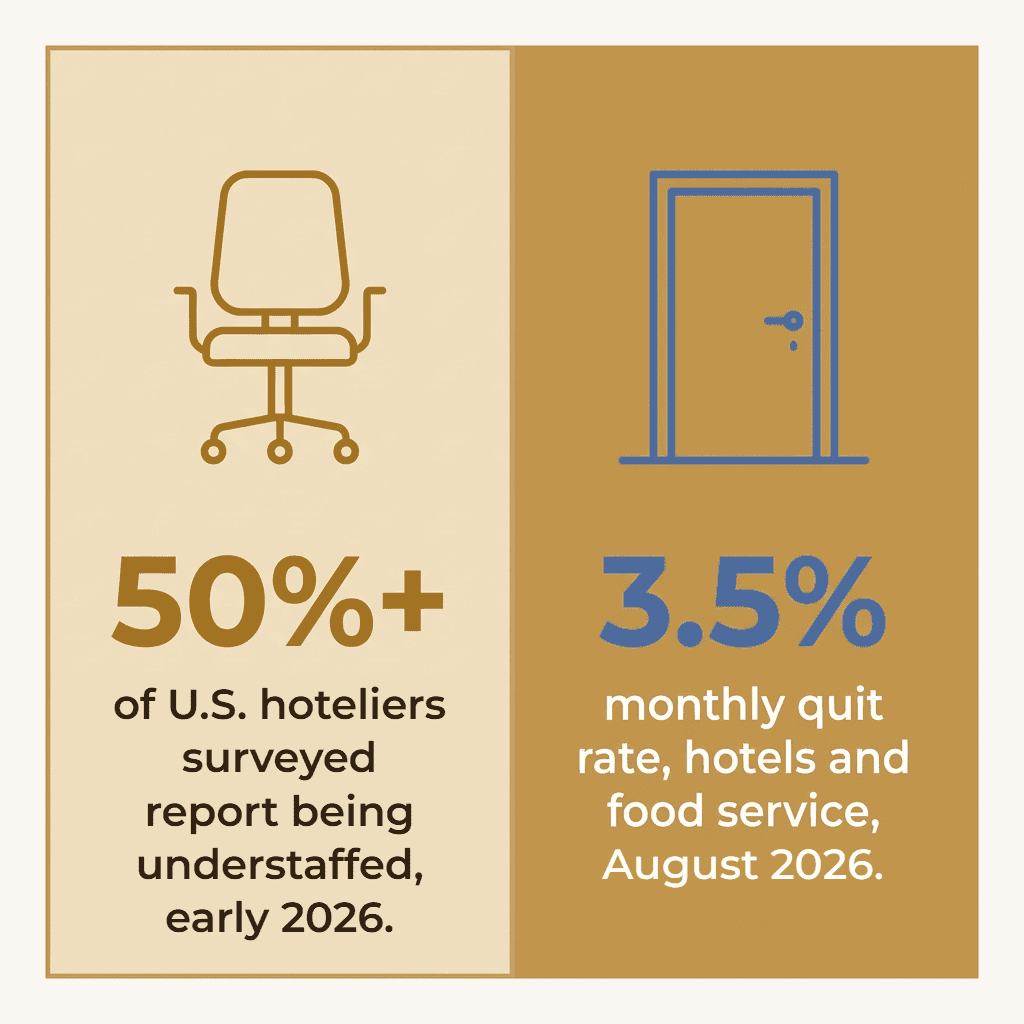
Night auditor positions are hard to fill mainly because fewer people are willing to work overnight than during the day. The hotel industry as a whole is also short on staff. More than half of U.S. hoteliers reported that their properties were understaffed in early 2026. A slow search for a night auditor is common across the industry.
Turnover is high as well. In August 2026, about 3.5 of every 100 workers in hotels and food service combined quit their jobs. The August 2026 quit rate covers a single month, so it counts only the workers who quit during August. Even after a good hire, plan for the chance that the position opens up again. For a closer look at the causes, see our guide to why overnight hotel staffing is hard to fill.
How to keep the night audit covered
One night auditor cannot cover every night of the year, so plan your backup coverage before you need it. If your night auditor works five nights a week, two nights still need someone else. Vacations, sick days, and last-minute call-offs add more open shifts. If your night auditor resigns, every night is open until you hire and train a replacement.
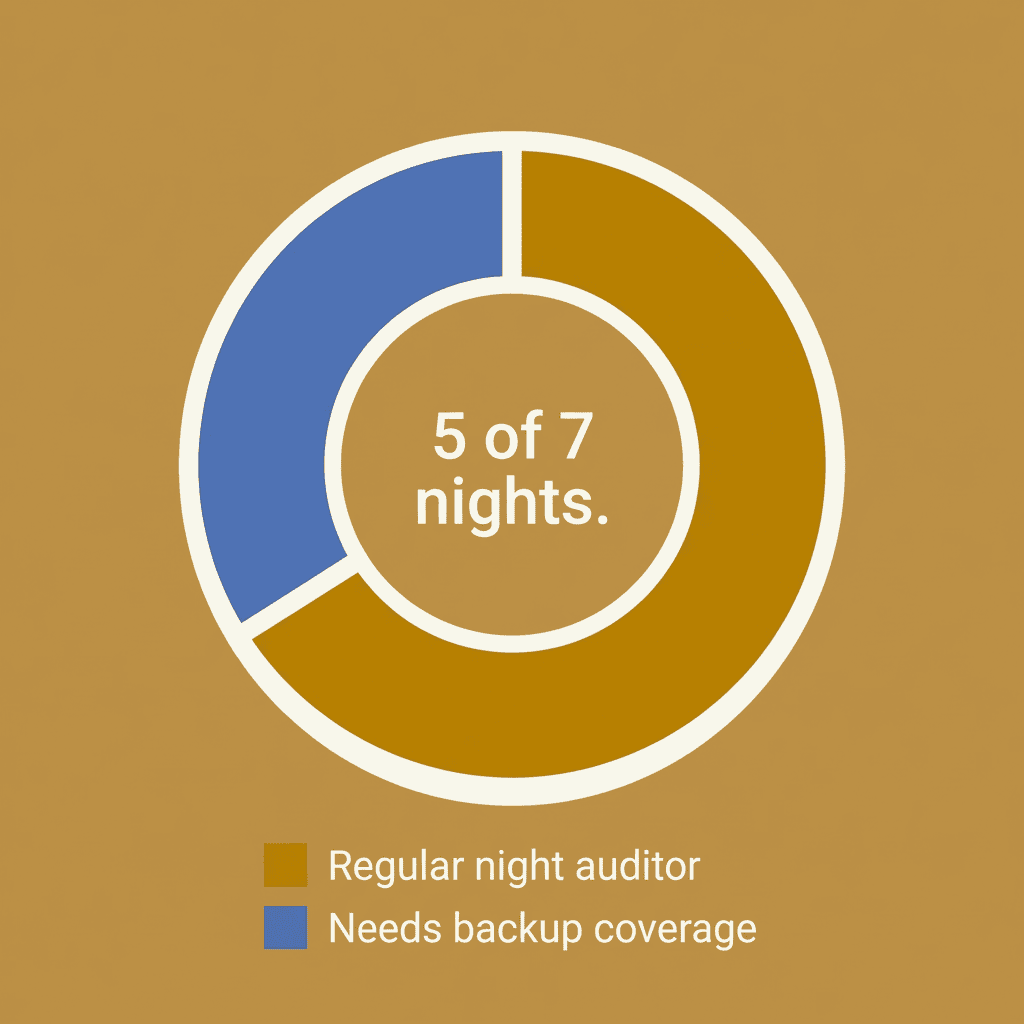
Your night auditor’s regular nights off are the easiest open nights to plan for, because you know about them in advance. A common approach is to cross-train at least one day desk clerk on the audit so they can cover your night auditor’s regular nights off. Another option is to hire a part-time night auditor who works only the nights your full-time auditor is off. Whoever covers should be fully trained on your audit before they work a night alone.
Call-offs and no-shows need their own plan, because they come with little or no notice. Decide ahead of time who will cover the shift when your night auditor cannot work. The person you choose should already be trained on the audit. Set a clear rule for how early your night auditor must call if they cannot come in, so your backup has time to get to the property. Keep a written checklist of your audit at the front desk so a backup person can follow it. If no one else on your team is trained, a manager has to work the shift.
In-house backup depends on having trained people available on the nights you need them. A staffing partner can cover the nights your own team cannot, or fill the night auditor position on an ongoing basis. At Tumi, we staff night auditors as part of our hotel front desk staffing. Our night auditors handle both the front desk work and the audit.
Every night auditor who covers your nights through Tumi is a W-2 employee of Tumi Hospitality, so Tumi, not your hotel, handles their payroll and benefits. Those benefits include health, dental, and life insurance and paid time off. Our employees also receive a first raise after a successful 90-day probation and another at one year, which rewards them for staying. For your hotel, that makes it more likely that the same trained person keeps covering your nights.
Every night auditor we place has passed our screening. Each one is also trained to your property’s standards, so they handle the front desk and the audit the way your hotel expects.
Once a Tumi night auditor is covering your nights, an area manager from our team visits your property every week. The area manager uses each visit to check on our night auditor’s work and find any problems early. They are also the single point of contact for our staff and your management team. Your managers can reach our on-call customer service around the clock for urgent issues between visits, while general inquiries are handled during standard business hours.
If a staffing partner is part of your backup plan, set it up before your first call-off. An ongoing night auditor position takes 2-3 weeks to fill, including screening and training. Same-day or next-day coverage is possible only when someone from our existing staff is available to take the shift.
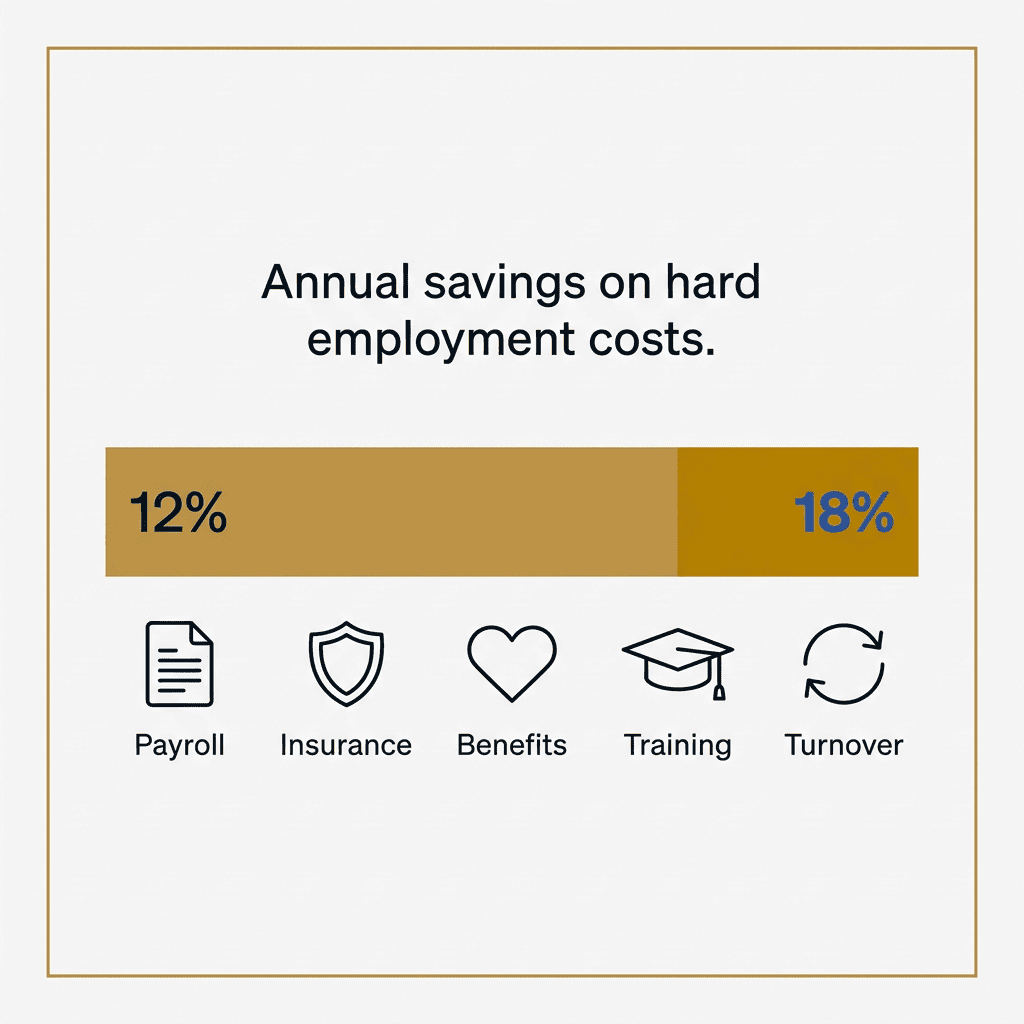
Cost also matters when you compare a staffing partner with covering the nights using your own staff. Staffing through Tumi saves hotels 12-18% a year on hard employment costs, compared with employing the same staff yourself. Hard employment costs are the expenses that come with employing someone directly. They include payroll taxes and workers’ compensation insurance. They also include benefits, such as health, dental, and life insurance and paid time off. Recruiting, training, HR staff time and overhead, and the cost of replacing employees who leave are hard employment costs too.
Talk with us about night audit coverage
If you would like help keeping your night audit covered, we are glad to talk through your property’s overnight schedule. You can request a no-obligation consultation on our contact page, call us at (512) 722-6000, or email info@tumihospitality.com. After we talk, we will send you a proposal based on the nights you need covered.